

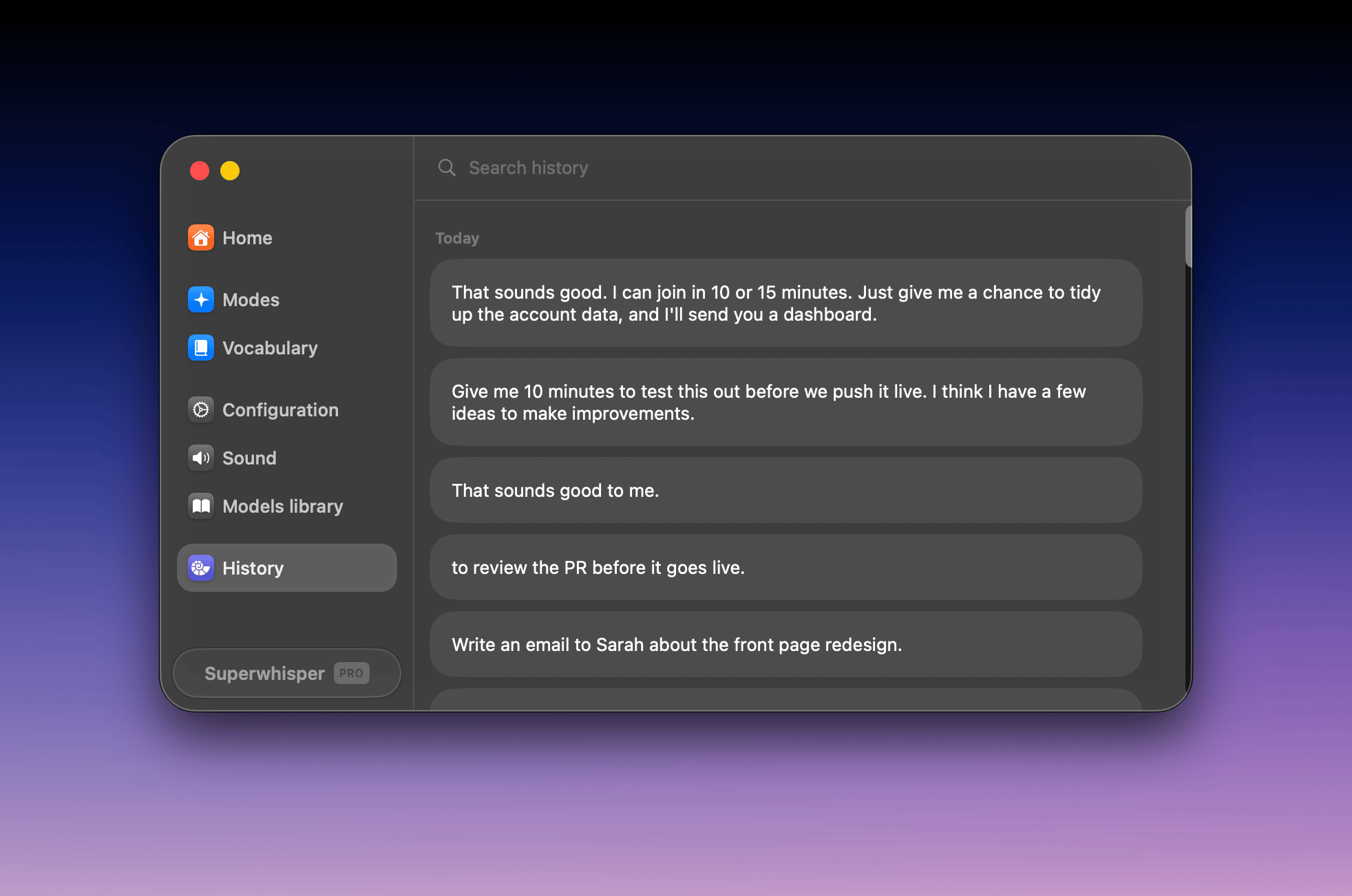
Open History
Open History from any of three places:- The History tab in settings
- The menu bar icon → History
- Right-click the mini recording window
Search recordings
The search field in the left sidebar filters your past dictations.Search filters the original dictation only, not AI-processed results.
Reprocess a dictation
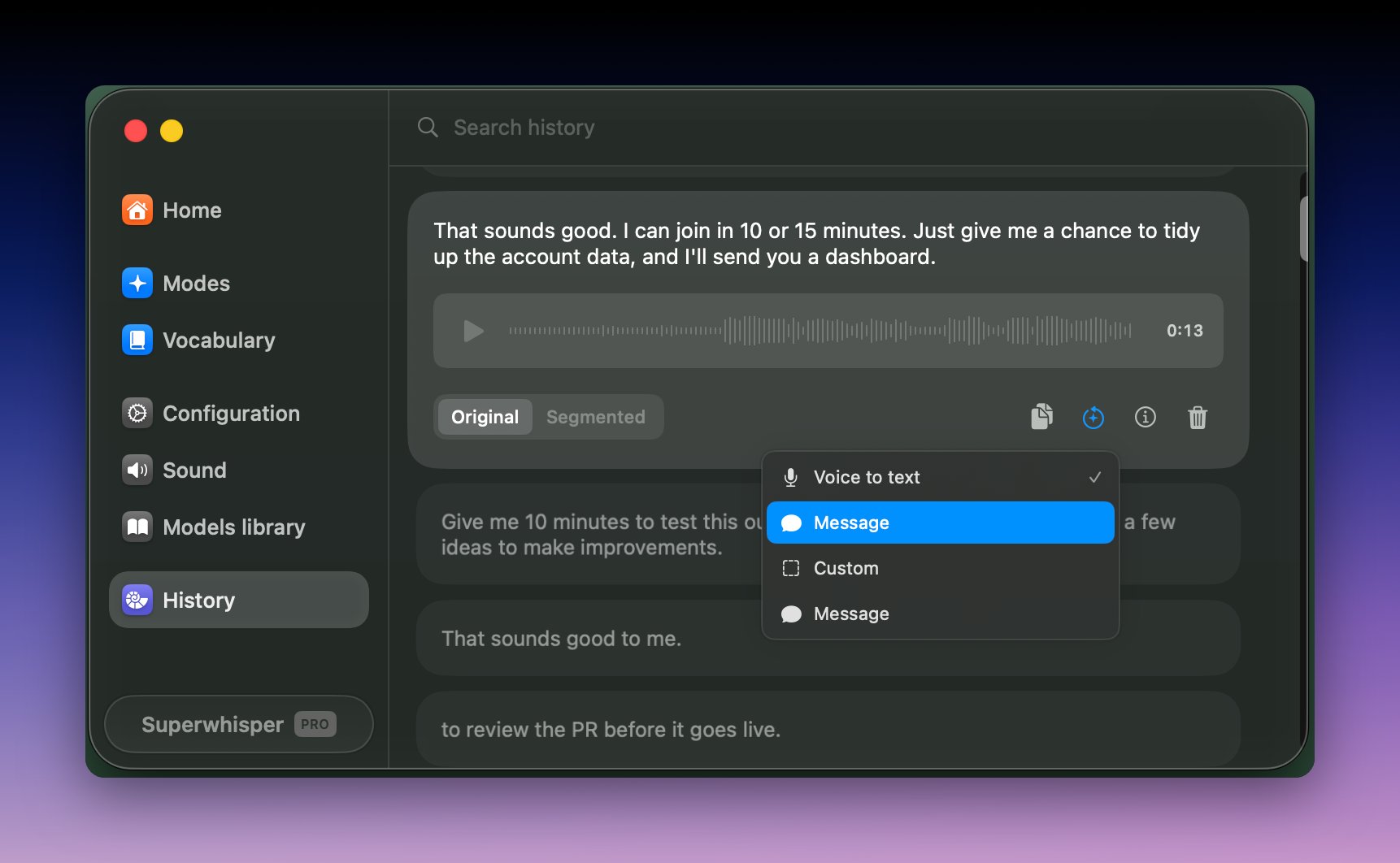
Retry a failed transcription or run an old dictation through a different mode without re-recording:- Open the dictation in History
- Click the reprocess icon below the recording
- Pick the mode to process it with
Dictation stats
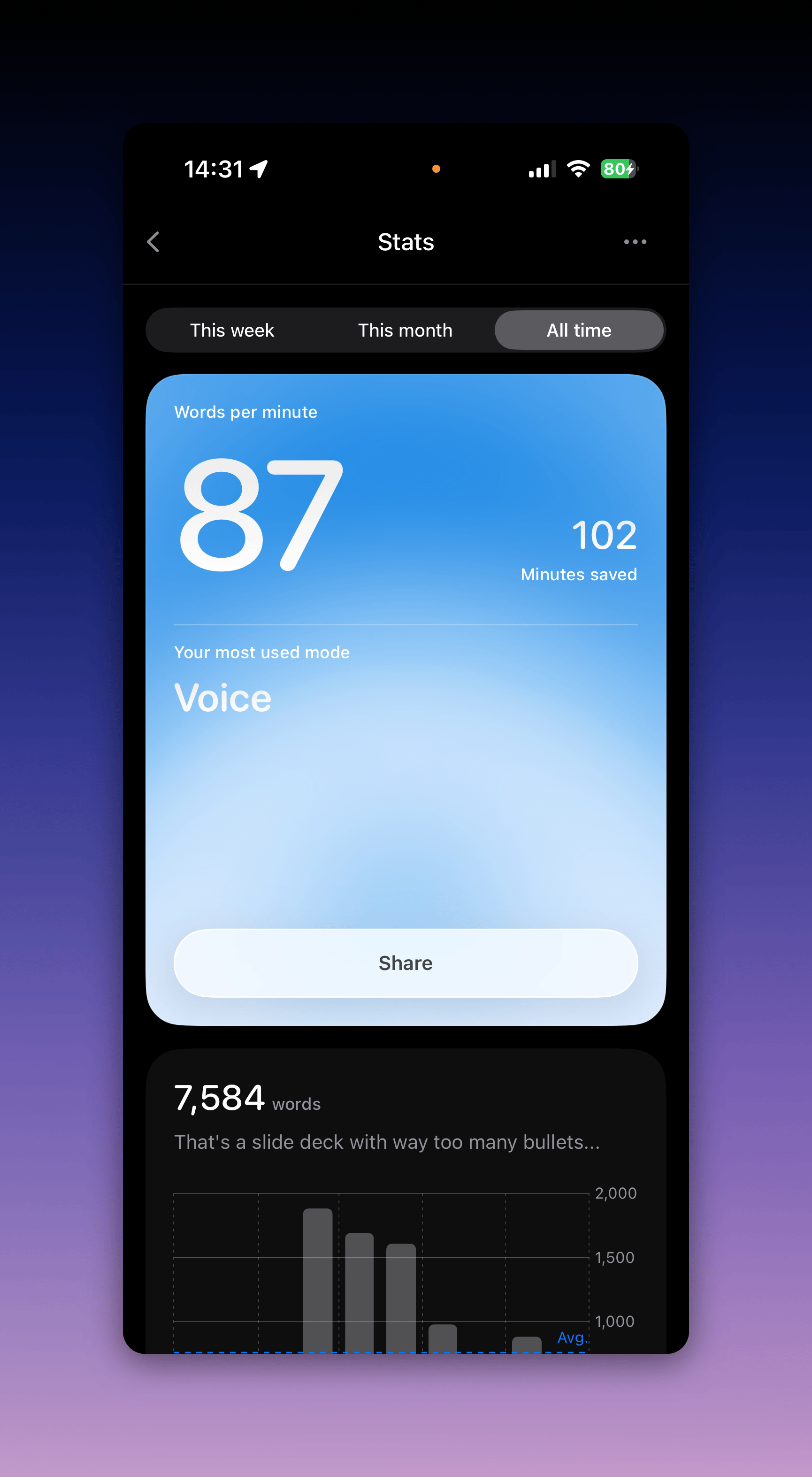
Superwhisper tracks summary statistics across your recordings: total dictations, total words, total recording time, and average words per minute. On iOS, open the app’s Settings to see them. On a Mac, the CLI prints them withsuperwhisper stats.
Report an issue
Report a problem directly from the recording it happened in:- Turn on Error logging in Settings → Configuration
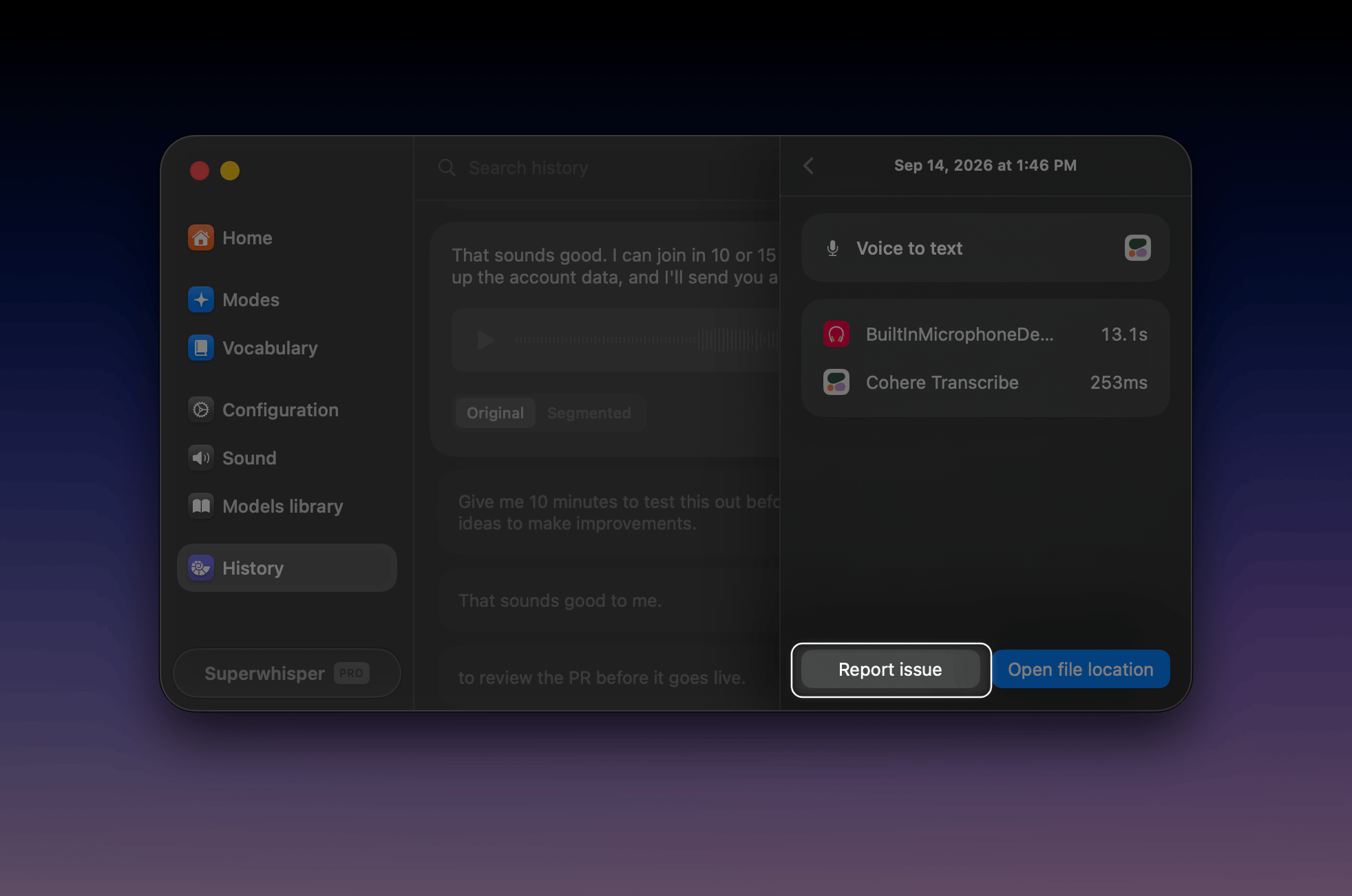
- Open the recording in History and click the info icon to show its details
- Click Report issue in the details sidebar
- What happened, and the steps to reproduce it
- Screenshots of your Configuration pane and the mode’s settings (including the prompt, for custom modes)
- The recording folder: select the test recording in History, click the folder icon to reveal it in Finder, compress the folder, and attach it
Where recordings are stored
Delete recordings
Superwhisper doesn’t delete recordings on its own. Delete them periodically to manage disk space:- In the sidebar: select recordings (hold Shift for several), right-click, Delete
- In Finder: select a dictation and click the folder icon to open the recordings folder, then delete files directly
Automate cleanup with a cron job (macOS)
Automate cleanup with a cron job (macOS)
There’s no built-in scheduled cleanup yet. This cron job deletes recording folders older than one day, every midnight:Add it with
crontab -e. Adjust -mmin +1440 (minutes) for a different age threshold, and the leading schedule fields for a different frequency. Preview what would be deleted first by running the find command with -print instead of -exec ... \;.